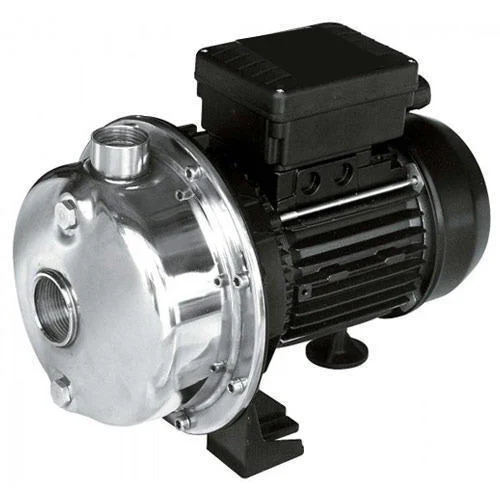
What Is an SS Pump?
An SS Pump is an industrial pump incorporating stainless steel in selected components, particularly where the application requires suitable corrosion resistance, durability, hygiene, cleanability, or material compatibility.
The exact construction of an SS Pump depends on its design and intended application.
Different stainless steel pump designs can be used for different types of liquid transfer.
The major SS Pump types offered by Toss Pumps include:
- SS Centrifugal Pump
- SS Lobe Pump
- SS Self Priming Pump
- SS Barrel Pump
Each type operates differently and should be selected according to the application.
What Is the Working Principle of an SS Pump?
The SS Pump Working Principle depends primarily on the type of pump being used.
There are two major pumping principles relevant to the Toss Pumps range:
- Centrifugal Pumping
- Positive Displacement Pumping
An SS Centrifugal Pump generally uses a rotating impeller to impart energy to the liquid.
An SS Lobe Pump uses rotating lobes to move a defined volume of liquid through the pump.
SS Self Priming Pumps use a pump configuration designed to establish pumping action under suitable suction conditions.
SS Barrel Pumps are designed for transferring suitable liquids from barrels, drums, and containers.
SS Centrifugal Pump Working Principle
An SS Centrifugal Pump works by converting mechanical energy from a rotating impeller into fluid energy.
The basic operating process can be understood as follows:
Step 1 – Liquid Enters the Pump
Liquid enters the pump through the suction connection.
Step 2 – Impeller Rotates
The motor drives the pump shaft and impeller.
Step 3 – Liquid Gains Energy
The rotating impeller transfers energy to the liquid.
Step 4 – Liquid Moves Toward the Discharge
The pump casing guides the liquid toward the discharge side.
Step 5 – Liquid Is Delivered to the System
The energized liquid exits through the discharge connection and moves through the connected pipeline or process equipment.
The actual performance depends on the pump's hydraulic design, speed, flow rate, head, liquid properties, and system conditions.
SS Lobe Pump Working Principle
An SS Lobe Pump operates using positive displacement.
It uses rotating lobes inside the pump chamber to move liquid from the inlet side toward the outlet.
Step 1 – Liquid Enters the Pump
The liquid enters through the suction connection.
Step 2 – Lobes Rotate
The pump's lobes rotate within the chamber.
Step 3 – Liquid Is Trapped
The rotating lobes create spaces that carry liquid around the pump chamber.
Step 4 – Liquid Moves Toward the Outlet
As the lobes continue rotating, the liquid is transported toward the discharge side.
Step 5 – Liquid Is Discharged
The liquid leaves the pump through the outlet.
This operating principle can make an SS Lobe Pump suitable for certain viscous and sensitive-fluid applications, depending on the actual product characteristics and operating requirements.
SS Self Priming Pump Working Principle
An SS Self Priming Pump is designed to establish pumping action under suitable suction conditions without requiring manual priming every time the pump is stopped, within its specified operating limitations.
The exact self-priming mechanism depends on the pump design.
In general, the pump configuration allows air and liquid to be handled in a manner that helps establish the required suction condition.
Important factors include:
- Suction Lift
- Liquid Properties
- Pump Design
- Pipe Configuration
- Air Leakage
- Operating Conditions
A self-priming pump should always be installed and operated according to its specified application limits.
SS Barrel Pump Working Principle
An SS Barrel Pump is designed for transferring suitable liquids from barrels, drums, and similar containers.
The pump is positioned so that the suction section reaches the liquid inside the container.
When the pump operates, liquid is drawn from the barrel and transported through the pump and discharge arrangement.
SS Barrel Pumps can be useful where liquids need to be transferred from portable storage containers rather than permanent process tanks.
Main Components of an SS Pump
The components of an Industrial SS Pump vary according to pump type.
Common components can include:
- Pump Casing
- Shaft
- Impeller or Lobes
- Mechanical Seal
- Bearings
- Motor
- Suction Connection
- Discharge Connection
- Coupling
- Base or Mounting Arrangement
Each component has a specific function in maintaining reliable pump operation.
Role of Stainless Steel in Industrial Pumps
The stainless steel construction of an SS Pump can provide advantages in applications where suitable material properties are required.
Depending on the selected grade and application, stainless steel can offer:
- Corrosion Resistance
- Durability
- Suitable Hygienic Characteristics
- Cleanability
- Mechanical Strength
However, stainless steel should not be considered universally resistant to every chemical or process condition.
The correct stainless steel grade should be selected according to the liquid and operating environment.
Factors That Affect SS Pump Performance
Understanding the SS Pump Working Principle is only one part of selecting and operating a pump.
Performance can also be affected by:
Flow Rate
The required liquid flow directly affects pump selection.
Pump Head
The pump must provide suitable head for the system.
Liquid Viscosity
Higher-viscosity liquids can require different pump characteristics.
Temperature
Temperature can affect viscosity, seals, materials, and operating conditions.
Specific Gravity
Liquid density can influence the power required for pumping.
Suction Conditions
Poor suction conditions can affect pump performance.
Pipework
Pipeline size, length, fittings, valves, and restrictions contribute to system resistance.
SS Pump Working Principle for Different Industrial Applications
The appropriate SS Pump depends on the application.
Chemical Industry
Chemical processes can involve corrosive or chemically active liquids.
The pump must be selected according to:
- Chemical Compatibility
- Concentration
- Temperature
- Pressure
- Material Grade
Food Processing Industry
Food-processing applications may require suitable hygienic and cleanable pump configurations.
An appropriate SS Pump can be considered for suitable liquid-transfer requirements.
Pharmaceutical Industry
Pharmaceutical applications may place greater emphasis on material selection, cleanliness, process conditions, and suitable equipment construction.
Dairy Industry
Dairy processing can involve liquids such as milk, cream, ingredients, and other process fluids.
Pump selection depends on:
- Viscosity
- Temperature
- Flow Rate
- Hygiene Requirements
Textile Industry
Textile processes can involve dyes, chemicals, water, and other process liquids.
A suitable Industrial SS Pump can be selected according to the fluid characteristics and process requirements.
SS Pump vs Other Industrial Pump Materials
Different pump materials can be suitable for different applications.
The selection between stainless steel, polypropylene, and other materials depends on:
- Chemical Compatibility
- Temperature
- Pressure
- Mechanical Requirements
- Liquid Characteristics
- Application Environment
Reliable Engineers – Toss Pumps also provides PP Centrifugal Pump solutions for suitable applications.
Therefore, the best pump material should be determined from the actual process requirements rather than simply selecting a material based on general assumptions.
How to Select the Right SS Pump?
Before purchasing an SS Pump in India, provide the pump supplier with complete application information.
Important details include:
- Liquid Type
- Flow Rate
- Pump Head
- Pressure
- Temperature
- Viscosity
- Specific Gravity
- Suction Conditions
- Discharge Conditions
- Operating Hours
- Required Material
- Application
This information helps the SS Pump Manufacturer determine an appropriate pump type and configuration.
Common SS Pump Selection Mistakes
Several mistakes can affect pump performance.
Selecting Only by Pump Size
A larger pump is not automatically a better pump.
Ignoring Liquid Viscosity
Viscosity can significantly influence the appropriate pump technology.
Ignoring Material Compatibility
The selected stainless steel grade must be appropriate for the liquid and operating environment.
Not Calculating System Head
The pump should be selected according to the complete system requirement.
Providing Incomplete Application Information
A pump supplier needs accurate operating information to recommend a suitable solution.
Maintenance Considerations for SS Pumps
Correct maintenance can help support reliable pump operation.
Depending on the pump design, maintenance may include:
- Checking Mechanical Seals
- Inspecting Bearings
- Checking Couplings
- Inspecting Pump Connections
- Checking for Leakage
- Monitoring Vibration
- Checking Motor Operation
- Inspecting Wear Components
The maintenance schedule should follow the pump manufacturer's recommendations and actual operating conditions.
Why Choose Reliable Engineers – Toss Pumps?
Reliable Engineers – Toss Pumps has more than 25 years of industry presence in industrial pumping solutions.
The company operates as an:
SS Pump Manufacturer | SS Pump Supplier | SS Pump Trader | SS Pump Exporter
Its product range includes:
- SS Lobe Pump
- SS Centrifugal Pump
- SS Self Priming Pump
- SS Barrel Pump
- PP Centrifugal Pump
- Customized Industrial Pump Solutions
The company focuses on providing suitable pumping solutions according to individual industrial applications.
SS Pump Manufacturer and Supplier Across India
Reliable Engineers – Toss Pumps supplies industrial pumping solutions to customers across India.
Its market coverage includes major industrial locations such as:
Ahmedabad, Vapi, Ankleshwar, Vadodara, Rajkot, Surat, Mumbai, Pune, Nashik, Nagpur, Delhi, Bangalore, Chennai, Hyderabad, Kolkata, Jaipur, Jodhpur, Chandigarh, Guwahati, Bhopal, Lucknow, Coimbatore, Kanpur and Patna.
The company also serves customers in other industrial markets throughout India.
Businesses searching for an SS Pump Manufacturer in India, SS Pump Supplier in India, Stainless Steel Pump Supplier, or Industrial Pump Manufacturer can contact Reliable Engineers – Toss Pumps.
Frequently Asked Questions About SS Pump Working Principle
What is the working principle of an SS Pump?
The SS Pump Working Principle depends on the pump design. Centrifugal pumps use rotating impellers, while positive displacement pumps such as lobe pumps use rotating lobes to move liquid.
How does an SS Centrifugal Pump work?
An SS Centrifugal Pump uses a rotating impeller to transfer mechanical energy to the liquid, allowing the liquid to move from the suction side to the discharge side.
How does an SS Lobe Pump work?
An SS Lobe Pump uses rotating lobes to capture and transport defined volumes of liquid through the pump chamber.
What is an SS Self Priming Pump?
An SS Self Priming Pump is designed to establish pumping action under suitable suction conditions and within its specified operating limitations.
Where are SS Pumps used?
SS Pumps can be used in suitable chemical, pharmaceutical, food, dairy, beverage, textile, manufacturing, and general industrial applications.
What factors affect SS Pump performance?
Important factors include flow rate, head, viscosity, temperature, pressure, specific gravity, suction conditions, material compatibility, and system resistance.
Which SS Pump is suitable for viscous liquids?
A suitable SS Lobe Pump can be considered for many viscous-liquid applications, depending on viscosity, pressure, temperature, flow rate, and product characteristics.
Can SS Pumps be customized?
Yes. Reliable Engineers – Toss Pumps provides customized industrial pumping solutions according to suitable application requirements.
Does Reliable Engineers supply SS Pumps across India?
Yes. Reliable Engineers – Toss Pumps serves industrial customers across India.
Contact Reliable Engineers – Toss Pumps for SS Pump Solutions
If you are searching for an SS Pump Manufacturer in India, SS Pump Supplier, Stainless Steel Pump Manufacturer, Industrial SS Pump Supplier, or customized industrial pump solution, contact Reliable Engineers – Toss Pumps.
Reliable Engineers – Toss Pumps
Address:
35,36 Shubh Estate, Nr. Zaveri Estate, Kathwada-Singarwa Road, Kathwada, Ahmedabad – 382430, Gujarat, India
Call: +91-9376021299
Email: info@reliableengineers.net
SS Pump Range
SS Lobe Pump | SS Centrifugal Pump | SS Self Priming Pump | SS Barrel Pump
Other Industrial Pump Solutions
PP Centrifugal Pump | Customized Industrial Pump Solutions
For an appropriate SS Pump, share your liquid type, flow rate, head, temperature, viscosity, pressure, and application requirements with Reliable Engineers – Toss Pumps.
Conclusion
Understanding the SS Pump Working Principle helps industries make better decisions when selecting equipment for liquid-transfer applications.
Different pump designs work according to different principles. SS Centrifugal Pumps use impeller-based centrifugal action, while SS Lobe Pumps use positive displacement through rotating lobes. SS Self Priming Pumps and SS Barrel Pumps are designed for their respective application requirements.
The correct Stainless Steel Pump should always be selected according to the liquid, flow rate, head, pressure, temperature, viscosity, material compatibility, and installation conditions.
With more than 25 years of industry presence, Reliable Engineers – Toss Pumps operates as an SS Pump Manufacturer, Supplier, Trader and Exporter in India.
The company offers SS Lobe Pumps, SS Centrifugal Pumps, SS Self Priming Pumps, SS Barrel Pumps, PP Centrifugal Pumps, and customized industrial pumping solutions.
Contact Reliable Engineers – Toss Pumps
35,36 Shubh Estate, Nr. Zaveri Estate, Kathwada-Singarwa Road, Kathwada, Ahmedabad – 382430, Gujarat, India
Call: +91-9376021299
Email: info@reliableengineers.net
Toss Pumps – Reliable Industrial Pumping Solutions Across India.