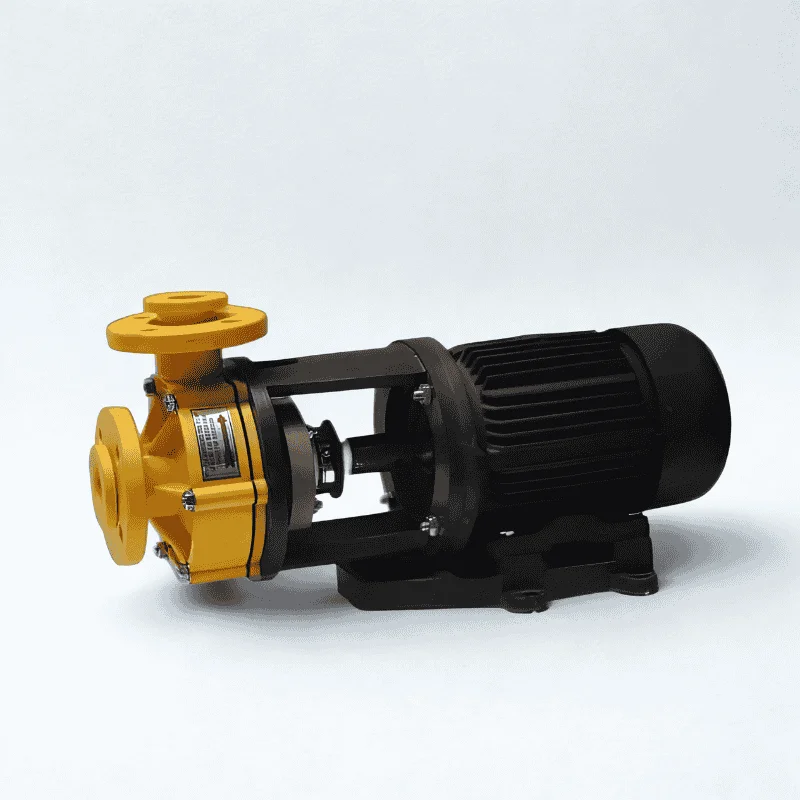
What Is a PP Centrifugal Pump?
A PP centrifugal pump is a centrifugal pump that uses polypropylene in its construction, typically in selected liquid-contact components or other specified parts. The exact construction varies by model and manufacturer.
Centrifugal pumps operate through a rotating impeller. Liquid enters the impeller area, receives energy from the rotating assembly, and moves toward the pump discharge. The pump converts mechanical energy into hydraulic energy to help move liquid through the connected piping system.
Polypropylene can be suitable for handling many acids, alkalis, and other industrial chemicals under appropriate conditions. However, it is not universally resistant to every chemical, solvent, or temperature. The compatibility of the complete pump—including casing, impeller, shaft arrangement, seals, gaskets, and other wetted parts—must be confirmed for the actual fluid.
How Does a PP Centrifugal Pump Work?
The operating principle of a polypropylene centrifugal pump is similar to that of other centrifugal pumps. Its main components work together to create flow through the system.
1. Liquid Enters the Pump
The liquid enters through the pump suction connection. The suction piping, available liquid level, and system arrangement should provide suitable inlet conditions for the selected pump.
2. The Impeller Rotates
An electric motor or another suitable drive source rotates the impeller. The impeller transfers energy to the liquid, increasing its velocity as it moves outward through the impeller passages.
3. Liquid Moves Through the Pump Casing
The pump casing guides the liquid toward the discharge. Depending on the pump design, part of the liquid's velocity energy is converted into pressure energy.
4. Liquid Leaves Through the Discharge
The liquid exits through the discharge connection and moves into the connected pipeline or process equipment. Actual flow and discharge pressure depend on the pump curve and the system's resistance.
5. The Pump Operates Within Its Designed Range
Correct pump selection helps ensure that the pump operates within an appropriate flow and head range. Chemical compatibility, motor sizing, suction conditions, and operating temperature also affect performance and service life.
Why Choose a PP Centrifugal Pump for Chemical Handling?
Industrial buyers often evaluate polypropylene pump construction when corrosion resistance and compatibility with the process liquid are important. The advantages depend on the chemical and the pump's exact design.
Resistance to Many Chemicals
Polypropylene centrifugal pumps may be suitable for many chemical solutions, including selected acids and alkalis. Compatibility must be checked against the specific chemical, concentration, temperature, and exposure conditions.
Non-Metallic Liquid-Contact Construction
Where the wetted parts are made from suitable polypropylene or other compatible non-metallic materials, the pump can help address corrosion concerns associated with certain process liquids. The material of every wetted component should be verified.
Practical Industrial Fluid Transfer
Centrifugal pump technology is widely used for moving liquids in industrial processes. A suitable PP pump can be considered for transfer duties where its flow and head characteristics match the application.
Potentially Reduced Corrosion-Related Maintenance
In compatible chemical services, suitable polypropylene components may reduce certain corrosion-related issues compared with an unsuitable metal material. Maintenance is still necessary, and wear, seals, bearings, and other components can require attention.
Versatile Installation Options
Depending on the model, PP centrifugal pumps may be available in different sizes, connection arrangements, and configurations. The correct arrangement must be selected for the required flow, head, fluid, and installation space.
Applications of PP Centrifugal Pumps Across Industries
PP centrifugal pumps can be considered in industrial applications where the process liquid is compatible with polypropylene and the pump's operating limits.
Chemical Processing Plants
Chemical facilities may use compatible PP pumps for transferring selected process chemicals between storage tanks, dosing systems, and production stages. The chemical composition and concentration should be evaluated before installation.
Water and Wastewater Treatment
Selected water-treatment processes involve chemical solutions used for pH adjustment, treatment, or other process functions. A PP pump may be suitable when the liquid, temperature, and operating requirements fall within the pump's specified limits.
Electroplating and Surface Treatment
Some surface-treatment processes use corrosive solutions that require compatible pump materials. Pump selection should consider the exact bath chemistry, temperature, contamination risk, and duty cycle.
Pharmaceutical and Process Industries
Selected process-liquid transfer applications may use non-metallic pumps where chemical compatibility is established. Additional requirements such as cleanability, material documentation, hygienic design, and regulatory compliance must be assessed separately.
Textile Processing
Textile operations may involve compatible dyes, chemical solutions, and treatment liquids. The pump should be selected according to the actual fluid characteristics, required flow, and process temperature.
Fertilizer and Agrochemical Operations
Some fertilizer and agrochemical solutions may be compatible with polypropylene. Because formulations vary considerably, the precise chemical composition and concentration must be checked before choosing a pump.
Industrial Chemical Storage and Transfer
PP centrifugal pumps may be considered for moving compatible liquids from storage tanks to process vessels, dosing arrangements, or other parts of a facility. Suction lift, tank layout, piping losses, and dry-running risks should be reviewed during system design.
These are potential application categories rather than a guarantee that every PP pump can handle every liquid used in these industries.
Important Factors When Selecting a PP Centrifugal Pump
Choosing a suitable PP chemical transfer pump requires more than matching the inlet and outlet sizes. Buyers should provide accurate information about the process and installation.
1. Chemical Composition
Identify the exact liquid, chemical mixture, concentration, and any impurities that may affect material compatibility. Confirm compatibility for the pump casing, impeller, seals, gaskets, and other wetted components.
2. Required Flow Rate
Determine the required volume of liquid per unit of time. Flow requirements should be based on the process duty, transfer time, and system design.
3. Total Dynamic Head
Total dynamic head includes the elevation difference and the losses associated with the piping, fittings, valves, and other system components. The selected pump must provide the required flow at the calculated head.
4. Operating Temperature
Temperature can affect polypropylene strength, dimensional stability, and chemical compatibility. Check the manufacturer's temperature limits for the exact pump model and liquid.
5. Suction Conditions
Review the liquid level, suction-line length, pipe diameter, fluid temperature, and available inlet pressure. Poor suction conditions can cause cavitation, reduced performance, and equipment damage.
6. Seal and Shaft Arrangement
The shaft-sealing arrangement and associated materials must be compatible with the liquid and operating conditions. Ask the supplier to confirm the seal type and the materials used in the wetted assembly.
7. Motor and Power Requirements
Motor power depends on the required flow, head, liquid properties, and pump efficiency. Confirm the supply voltage, frequency, motor enclosure, and other electrical requirements for the installation.
8. Installation and Duty Cycle
Determine whether the pump will operate continuously, intermittently, or in a batch process. Consider available space, mounting, piping loads, maintenance access, and the operating environment.
PP Centrifugal Pump vs Metal Centrifugal Pump
Polypropylene and metal pumps serve different applications. The right choice depends on chemical compatibility, mechanical requirements, temperature, pressure, and the specific pump construction.
| Specification |
Details |
| Construction material |
PP pumps use polypropylene in specified components; metal pumps use materials such as stainless steel or other suitable alloys. |
| Chemical compatibility |
Polypropylene can suit many chemicals, while metal suitability depends on the alloy and process fluid. Compatibility must be verified for both. |
| Temperature limits |
Depend on the specific PP or metal pump design, materials, pressure, and chemical conditions. |
| Mechanical requirements |
Must be assessed against the application's pressure, structural, and operating requirements. |
| Maintenance considerations |
Both types require inspection and maintenance. The main wear and corrosion risks depend on the liquid and construction. |
| Selection priority |
Choose the material and pump design that meet the required chemical, hydraulic, mechanical, and operating conditions. |
A non-metallic pump is not automatically better than a metal pump. The decision should be based on verified compatibility and the complete operating requirements.
Common PP Centrifugal Pump Problems and Their Causes
Understanding common pump symptoms can help maintenance teams identify when further inspection is required. A symptom alone does not confirm that the pump itself is defective.
Low Flow or Discharge Pressure
Possible causes include a blocked suction line, incorrect rotation, air entering the system, a worn impeller, unsuitable operating conditions, or excessive system resistance. Check the pump curve and installation before deciding on corrective action.
Unusual Noise or Vibration
Noise and vibration may result from cavitation, misalignment, loose mounting, bearing wear, air entrainment, or operation outside the recommended range. Stop and inspect the equipment if the condition indicates a safety or damage risk.
Liquid Leakage
Leakage may be associated with seal damage, incorrect installation, chemical incompatibility, worn components, or excessive pressure. Isolate the system safely and inspect the affected components.
Motor Overheating
Overheating may be caused by excessive load, electrical problems, unsuitable operating conditions, restricted flow, or mechanical issues. A qualified technician should assess the motor and pump together.
Frequent Seal Failure
Seal failure can be linked to chemical attack, unsuitable seal materials, dry running, misalignment, vibration, or operating conditions outside the design range. Verify the complete seal arrangement against the process fluid.
Maintenance Tips for PP Centrifugal Pumps
Proper maintenance helps support safe and reliable operation. The recommended schedule should follow the pump manufacturer's instructions and the requirements of the process liquid.
- Check for leakage: Inspect the casing, seals, joints, and piping connections for signs of leakage.
- Monitor performance: Record flow, pressure, motor current, and operating temperature where appropriate.
- Maintain clean suction conditions: Check strainers and suction piping according to the system design.
- Avoid dry running: Confirm that the pump is correctly primed and supplied with liquid as required by its design.
- Inspect mechanical components: Check mounting, alignment, bearings, coupling, and other relevant parts.
- Verify chemical compatibility: Review material compatibility whenever the process liquid or concentration changes.
- Follow operating limits: Do not exceed the specified temperature, pressure, flow, or speed limits.
- Use qualified personnel: Follow approved isolation, depressurization, and maintenance procedures before opening or servicing the pump.
How to Request a Quotation for a PP Centrifugal Pump
Providing complete information helps a supplier assess the pump requirement more accurately and reduces the risk of selecting an unsuitable model.
- Describe the liquid: Share the chemical name, concentration, temperature, and relevant fluid properties.
- Specify the flow rate: State the required flow in the units used for your process.
- Provide the total head: Include elevation, piping, and other relevant system losses where known.
- Confirm the operating schedule: Explain whether the pump will run continuously or intermittently.
- Share installation details: Provide suction conditions, discharge arrangement, connection sizes, and available space.
- Confirm material requirements: Identify any required body, impeller, seal, or gasket materials.
- State electrical requirements: Include motor power needs, supply voltage, frequency, and applicable site requirements.
- Request a detailed quotation: Ask for the proposed model, technical data, price, delivery schedule, and applicable warranty terms.
If the application involves hazardous, corrosive, or temperature-sensitive chemicals, have the complete pump specification reviewed by a qualified technical professional before purchase and installation.
Why Consider Reliable Engineers – Toss Pumps?
Reliable Engineers – Toss Pumps serves industrial pumping requirements. Customers considering a PP Centrifugal Pump can share their process details to discuss the type of pump and material requirements that need to be evaluated for the application.
- Industrial pump enquiries: Discuss pumping needs for chemical handling and other suitable fluid-transfer duties.
- Application-based selection: Provide flow, head, fluid, and temperature information to clarify the requirement.
- Material compatibility considerations: Identify the process chemical and ask for confirmation of the wetted materials.
- Technical requirement review: Confirm pump configuration, motor requirements, and installation conditions before ordering.
- Procurement planning: Share the required quantity, delivery location, and expected schedule for quotation purposes.
Before placing an order, verify the available pump model, material specifications, performance data, operating limits, and commercial terms. Specific product availability and technical capabilities should be confirmed directly with the company.
PP Centrifugal Pump Requirements Across India
Industrial facilities throughout India may need polypropylene centrifugal pumps for compatible chemical-transfer, water-treatment, surface-treatment, and process applications. The correct pump selection depends on the operating conditions of the facility, not simply its location or industry name.
When requesting a PP Centrifugal Pump in India, provide the process fluid, concentration, required flow, total head, operating temperature, installation details, and material requirements. These details help clarify the application and the technical specifications needed for a quotation.
Reliable Engineers – Toss Pumps can be contacted to discuss industrial pump requirements and confirm the appropriate product information, configuration, and commercial terms for your application.
Frequently Asked Questions About PP Centrifugal Pumps
1. What is a PP centrifugal pump?
A PP centrifugal pump is a centrifugal pump that uses polypropylene in specified construction components. It may be suitable for compatible industrial liquids depending on the pump design and operating conditions.
2. What does PP stand for in a PP pump?
PP stands for polypropylene, a thermoplastic material used in selected industrial pump components because of its properties and compatibility with many chemicals.
3. How does a PP centrifugal pump work?
A rotating impeller transfers energy to the liquid, helping move it through the pump casing and into the discharge piping.
4. What are PP centrifugal pumps used for?
They may be used for compatible chemical transfer, selected water-treatment processes, surface treatment, and other industrial liquid-handling applications.
5. Are PP centrifugal pumps suitable for acids?
Some polypropylene pump designs can handle certain acids. Suitability depends on the exact acid, concentration, temperature, and materials used in all wetted components.
6. Can a PP centrifugal pump handle alkalis?
Polypropylene may be compatible with many alkaline solutions, but the specific chemical composition, concentration, temperature, and seal materials must be checked.
7. Is polypropylene resistant to every chemical?
No. Polypropylene is not universally compatible with every chemical or solvent. Always consult a chemical compatibility reference and verify the pump manufacturer's specifications.
8. What information is needed to select a PP centrifugal pump?
Important details include the process fluid, concentration, temperature, flow rate, total head, suction conditions, operating schedule, material requirements, and electrical supply.
9. How do I calculate the required pump head?
Required total dynamic head includes the elevation difference and losses through pipes, fittings, valves, and equipment. A hydraulic calculation should establish the required duty point.
10. What is the difference between flow rate and pump head?
Flow rate describes the volume of liquid moved per unit of time. Pump head represents the energy added to the liquid per unit weight and is commonly expressed in metres of liquid.
11. Can a PP centrifugal pump handle hot liquids?
It depends on the specific pump design, polypropylene grade, pressure, and chemical compatibility. Confirm the manufacturer's temperature limits before use.
12. Can PP centrifugal pumps be used for continuous operation?
Some models may be suitable for continuous duty, but this must be confirmed from the pump's rating, operating point, motor specification, and process conditions.
13. Why is my centrifugal pump delivering low flow?
Possible causes include suction restrictions, air ingress, incorrect rotation, excessive system resistance, impeller problems, or operation outside the recommended range.
14. What causes noise in a PP centrifugal pump?
Noise may result from cavitation, air entering the system, loose mounting, bearing problems, misalignment, or unsuitable operating conditions.
15. Can a PP centrifugal pump run dry?
Do not assume it can. Dry-running tolerance depends on the exact design and sealing arrangement. Follow the manufacturer's instructions and avoid operation without the required liquid supply.
16. What types of seals are used in PP centrifugal pumps?
Seal arrangements vary by model and application. The seal materials must be compatible with the liquid, temperature, pressure, and operating conditions.
17. What is the difference between a PP pump and a stainless steel pump?
The main difference is construction material. Both have application-specific advantages and limitations, so the choice should be based on chemical compatibility, temperature, pressure, and mechanical requirements.
18. Can PP centrifugal pumps be used in wastewater treatment?
They may be suitable for certain chemical dosing or liquid-transfer duties where the liquid is compatible with the pump. Suspended solids and other process characteristics must also be evaluated.
19. Are PP centrifugal pumps suitable for electroplating?
They may be considered for compatible electroplating solutions. The specific bath chemistry, temperature, and material requirements must be verified.
20. What motor information is required when ordering a pump?
Provide the required power, voltage, frequency, phase, operating conditions, and any relevant site or hazardous-area requirements.
21. Why is suction piping important?
Incorrect suction piping or inadequate inlet conditions can contribute to cavitation, air ingress, reduced flow, and pump damage. The suction system should be designed according to the pump requirements.
22. How can I prevent chemical corrosion or material damage?
Verify compatibility for the liquid, concentration, temperature, casing, impeller, seals, gaskets, and other wetted components before operation.
23. How often should a PP centrifugal pump be maintained?
Maintenance frequency depends on the model, duty cycle, process fluid, and operating environment. Follow the manufacturer's schedule and monitor performance for changes.
24. What causes leakage from a PP centrifugal pump?
Potential causes include seal damage, chemical incompatibility, incorrect installation, worn components, or operation outside the specified limits.
25. How do I choose the correct pump capacity?
Determine the required flow and total head, then compare the system duty point with the manufacturer's pump curve. Consider the liquid properties and operating conditions.
26. Can a PP centrifugal pump transfer flammable chemicals?
Only if the complete pump system is specifically suitable for the chemical and the applicable fire, electrical, hazardous-area, and process safety requirements are met. Obtain a qualified engineering assessment.
27. What should I include in a pump quotation request?
Include the fluid name, concentration, temperature, required flow, total head, operating schedule, material requirements, electrical supply, quantity, and delivery location.
28. Does a PP centrifugal pump require priming?
Priming requirements depend on the pump design and installation. Follow the manufacturer's instructions and ensure the pump has the required liquid supply before starting.
29. How can I enquire about a PP centrifugal pump from Reliable Engineers?
Contact Reliable Engineers – Toss Pumps with your process details, flow and head requirements, liquid information, temperature, and installation needs to discuss the suitable pump specification.
30. Why is material compatibility important when buying a PP centrifugal pump?
Material compatibility helps prevent chemical attack, premature component failure, leakage, and unsuitable operation. All wetted materials should be verified for the actual process conditions.
Contact Reliable Engineers – Toss Pumps
If your facility requires a PP Centrifugal Pump for chemical transfer or another compatible industrial application, prepare the process and installation details before requesting a quotation. Accurate information helps clarify the required pump performance and material specifications.
Company Name: Reliable Engineers
Brand: Toss Pumps
Experience: 25+ Years
Business Type: Manufacturer, Trader, Exporter & Supplier
Address: 35,36 Shubh Estate, Nr. Zaveri Estate, Kathwada-Singarwa Road, Kathwada, Ahmedabad – 382430, Gujarat, India
Phone: +91-9376021299
Email: info@reliableengineers.net
Contact Reliable Engineers – Toss Pumps to discuss your pumping requirements and confirm the available product configuration, technical details, and commercial terms for your application.